The Restoration Process
Planning
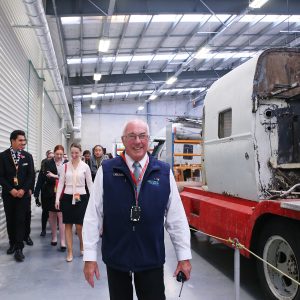
When an aircraft is to be restored, the relevant Museum staff collaborate to decide on the final outcome of the project, including the final display state to reflect the period the item represents. This decision can have a considerable effect on the final configuration of the artefact.
Assessment
This phase of the project involves a variety of activities. One important task is to catalogue all parts, relevant publications and drawings held, which will assist in the restoration. This identifies any deficiencies that will need to be sourced to complete the restoration. Following this process, the restoration project team can then assess the sequence of the restoration, and begin hands-on work.
Restoration, Preservation and Conservation
Although similar, these three terms cover a range of activities that can be carried out on aircraft/item during the restoration process. The major priority of the Museum is to preserve existing structures and finishes where appropriate, and this involves conservation processes aimed to prolong the lifespan of original items. However, sometimes retaining original parts is impossible, due to strength, corrosion or general deterioration. If this is the case, the technicians will then replace sections or entire parts with new structure, which uses the same materials and construction techniques as the originals. These reproductions are documented and clearly identified, so that future study of the artifact and its structure can accurately identify new and old areas.
The Finished Product
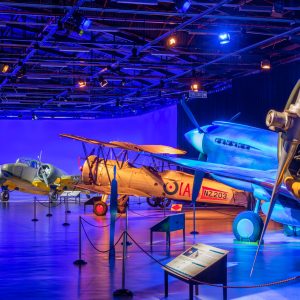
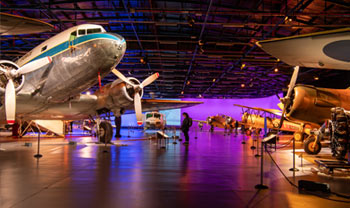
At the end of a major restoration project, the Museum aims to have a lasting artifact that it can use to further illustrate the rich history of the RNZAF. Although only part of the story, when combined with personal artifacts and memorabilia, our aircraft can be used to tell the larger story of our Air Force and its people.
To fly, or not to fly?
The Museum has over 30 aircraft in its collection. Mostly they are complete and in sound condition and therefore many of these aircraft have the potential to be returned to flying condition. So why not fly them? To do so would mean additional levels of technical complexity to meet airworthiness standards; it would be financially costly; and most significantly, a great deal of historically valuable evidence would be removed from the aircraft in the process.
To fly our aircraft or even start the engines would require original material and components to be replaced or altered permanently. At a stroke the originality of the aircraft would be lost forever. At the Museum we seek to preserve our unique collection for future generations. We aim to provide a vital source of reference for historians and engineers and to truly represent the story of these aircraft to our visitors. To achieve this we attempt to keep as much of their original structure and identity intact.