

What's on at Air Force Museum of New Zealand
Latest from the museum
Latest Exhibition
Defence Photographers
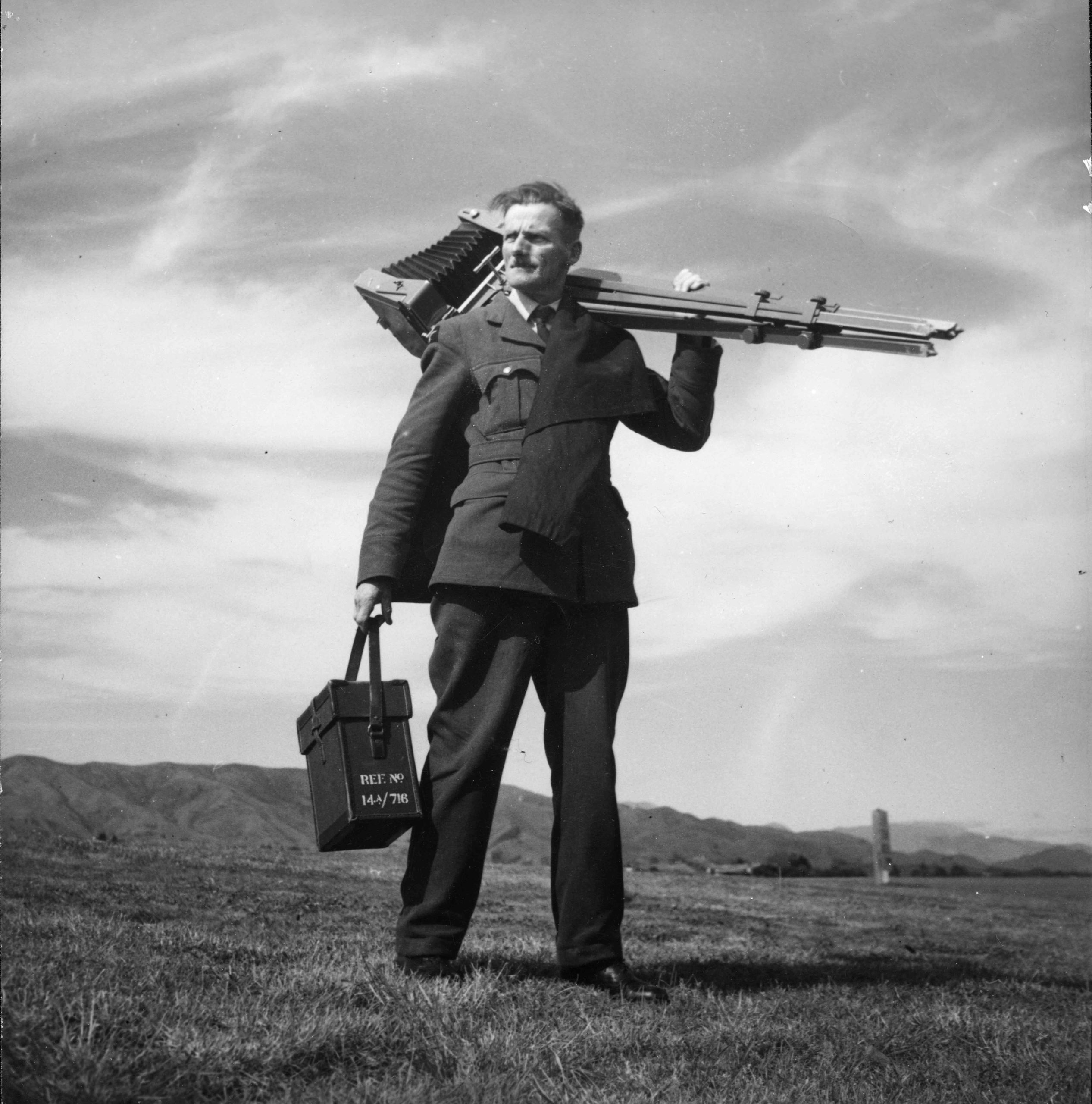
This brand-new exhibition features 40 stunning images from the portfolios of our eight New Zealand Defence Force photographers.
The exhibition also features the story of photography as a trade in the RNZAF, which dates back to 1929, and a display of historic cameras taken from our collection.
Learn More
Exhibition
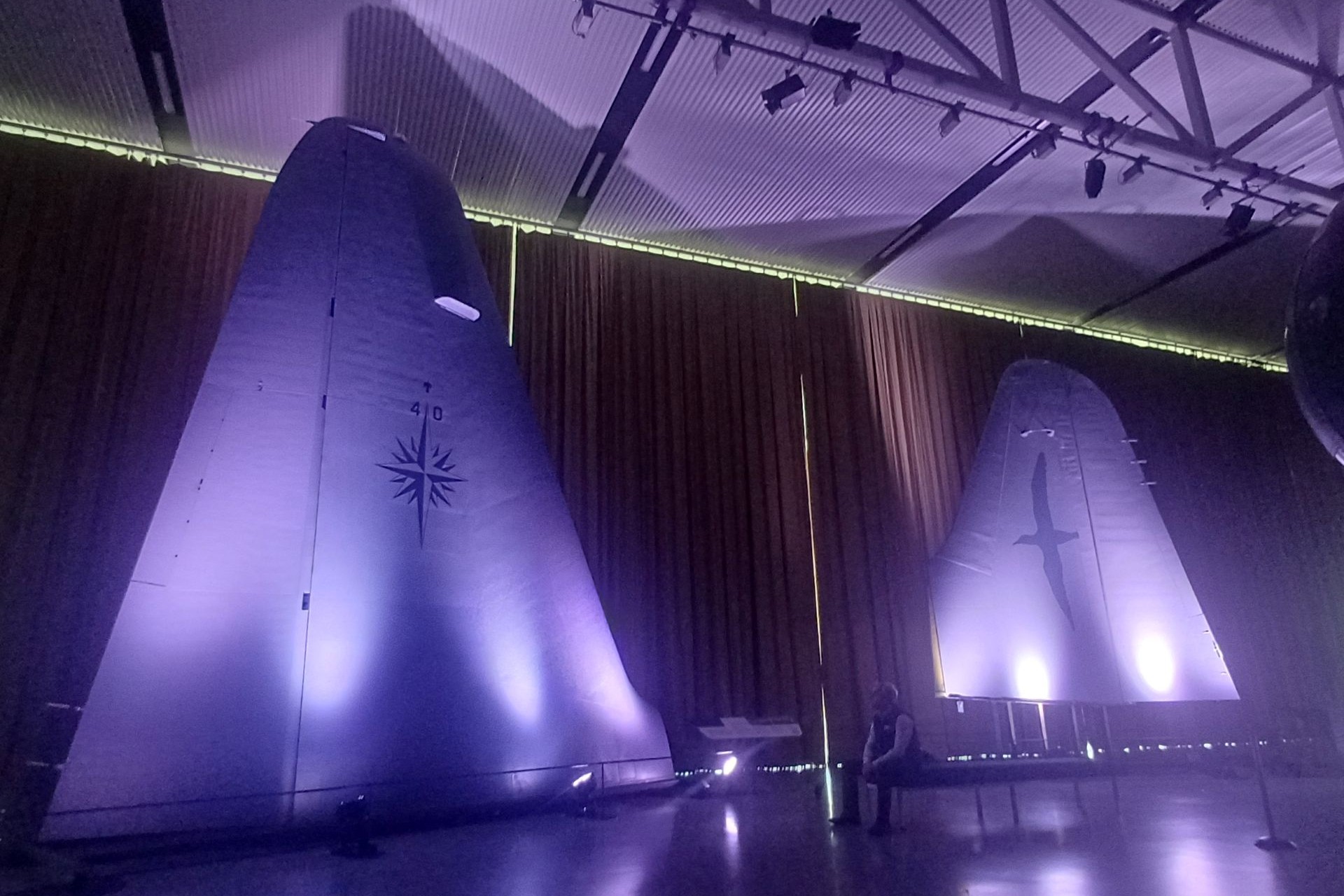
Tall Tails
Our Tall Tails exhibition features the mounted tails of the C-130 Hercules and P-3 Orion, this new exhibition brings visitors closer to two extraordinary aircraft and the stories they carry. It also highlights the importance of finding a permanent home for them, as the Museum continues to fundraise through the Home for Heroes project.
Tall Tails is on display in our Thérèse Angelo Wing.
Learn More
Exhibition
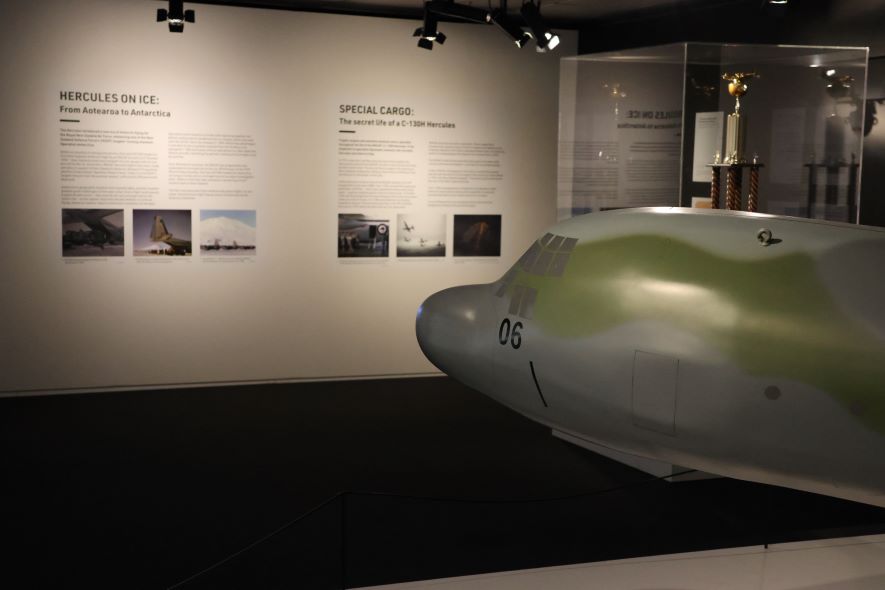
The Mighty Hercules
The Mighty Hercules exhibition is on in the Cochrane Gallery upstairs in our atrium. Come and visit and learn all about this extraordinary aircraft.
Learn More
Support Us
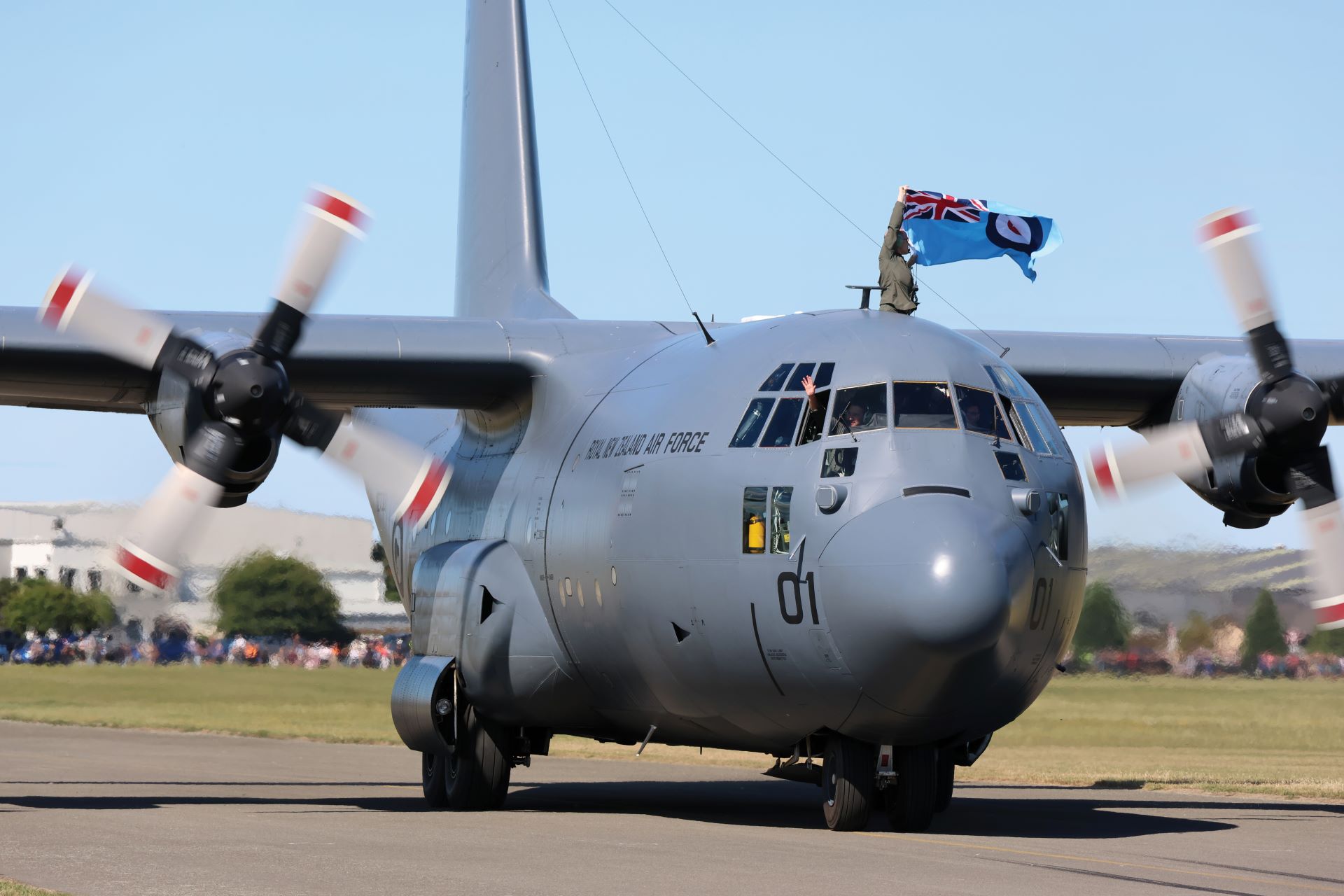
Home for Heroes
Join us in building a forever home for New Zealand’s C-130 Hercules and P-3 Orion – icons of service.
For more than half a century, these legendary aircraft carried our nation’s courage across the world – in peace, crisis, and discovery. Now, they need a home worthy of their legacy, where their stories of service, innovation and humanity will continue to inspire.
Learn More
Birthday Parties
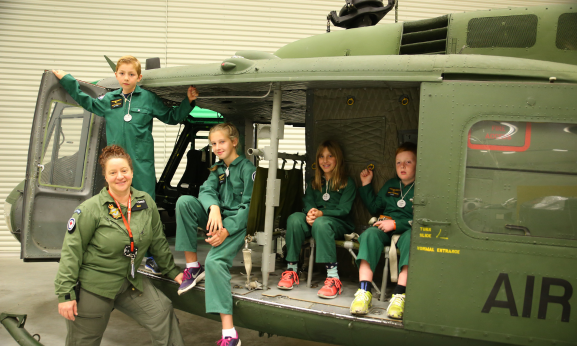
Mission: Best birthday ever
Zip up a flight suit, grab your dog tags, and dive into a fully hosted birthday “mission”. From air & sea adventures for preschoolers to rescue and cadet challenges for older children. Our Programmes team runs the activities, the children get awesome photo moments (and party bags), and you can add catering through our café.
Book a birthday party
Our Aircraft
Explore AircraftMore to explore


TEAM 626: The team behind the restoration of the RNZAF’s only surviving Avro 626 has reunited in Christchurch for the first time in more than 40 years.
Back in 1981, a scrim wall went up in the back of the Air Maintenance Squadron hangar at Ohakea, and a crack team of specialists was assembled with orders to restore NZ203 to flying condition.
The Avro was one of four purchased in 1935 as advanced pilot trainers. They were superseded in the RNZAF by different types by 1942, and by 1980 there was only one left in the RNZAF, and in the world.
NZ203 was in terrible condition – ‘pretty buggered’ in the words of the team - and the orders were to get it airworthy for airshows with minimal maintenance needed for the next 20 years.
Warrant Officer (retired) Jim Fordyce was in charge of the project, and the team lost count of the hours that went into getting it ready for its return to the skies as part of the RNZAF Historic Flight in July 1983 – 50 years after it arrived brand-new in New Zealand.
The team included Jim Fordyce, Paul McSweeny, Tony Chippindale, Sjoerd Bakker, Rene Redmond, Keith Braddock and Buck Harrison.
“We changed or repaired every nut, bolt and rivet,’’ Jim says. “Every day everyone at Ohakea seemed to be putting their nose in behind the wall to see what we were up to.
“We lost count of the hours but it was a joy to work on and it is great to be back together again.’’
The Avro flew until an engine fault - its Cheetah engine developed a crankshaft crack - forced it into early retirement here at the Air Force Museum of New Zealand in the late 1980s.
It is one of our greatest treasures as the oldest and rarest complete RNZAF aircraft in our collection.
Thanks for all your work and for visiting your museum! ... See MoreSee Less
Comment on Facebook
Amazing work.
Looking good Buck Harrison 🫡🫡🫡
❓MYSTERY CONTROL COLUMN COMPETITION❓: This week's mystery control column competition is officially a head scratcher.
All you have to do is identify which aircraft in our collection this control column (we also accept joystick, cyclic or collective) belongs to.
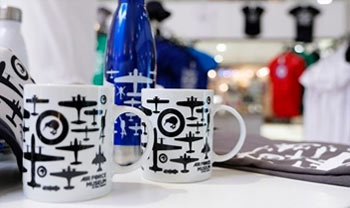
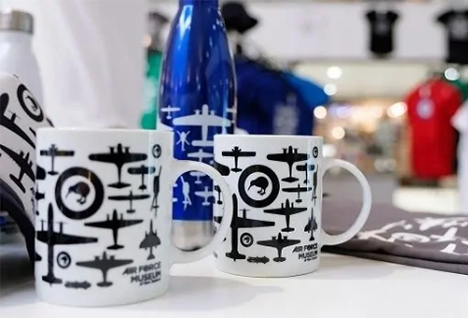
Correct answers will go in the draw to win one of our stunning Air Force Museum of New Zealand roundel coffee mugs.
They are round, with roundels and perfect for tea, coffee and Milo.
The very best of luck. You are going to need a lot of #MysteryObjectbj#wedonthaveacluea#ImpossiblePuzzleuzzle ... See MoreSee Less
Comment on Facebook
Oooh... that radio PTT looks mitey dicey! I wonder how many thoughts and expletives were inadvertently broadcast on the airwaves 🤔🤣...
Sea sprite
Bristol Freighter?
Seasprite. give away is the dual engine instruments visible
A Seasprite.
I was going to guess Bluntie (grey dash, duel sticks, modern ish dials), but turns out I'm wrong!
Seasprite ?
Is it one of the SH-2F Seasprites?
I agree with Morgan it's a Kaman SH-2F Seasprite cockpit
Has to be SH-2F
Cyclic flight control SH-2F Seasprite helicopter
Kaman SH-2F Seasprite
Sikorsky CH-3E
Kaman Seasprite
Fa 22 raptor.....
Kaman SH-2F Sea Sprite
Kaman SH-2F Seasprite NZ3442
Kaman SH-2F Seasprite
Our lovely Sea Sprite
NZ3442 Seasprite Cyclic.
Seasprite heli!
Yep the Seasprite. The inst and the stick grip are American but what clinched it was the dual eng inst and the display
Seasprite helicopter
Seasprite!
Seasprite
View more comments
STRAIT CONQUERED! On this day in 1920 the Canterbury Aviation Company’s chief pilot Captain Euan Dickson, chairman CH Hewlett and mechanic JE Moore made the first successful crossing of Cook Strait in an aircraft.
Captain Dickson and the crew took off from Sockburn in their Avro 504K at 7am, but headwinds forced them to have an unscheduled break in a paddock at Kaikoura.
Undeterred, they set off again, crossed over Blenheim and finally landed at Trentham Racecourse, with a total time elapsed of 4 hours and 40 minutes for the flight.
The Avro carried mail, making it the first air mail flight between the islands.
Euan Dickson was an exceptional pilot by any measure. The British-born Kiwi flew in World War One, completing 175 raids in his De Havilland DH4.
Regarded as the most successful bomber pilot of World War One, he was awarded a Distinguished Service Cross twice, a Distinguished Flying Cross and the French Croix de Guerre medal. He was credited with shooting down 14 enemy aircraft.
Euan died in Auckland in 1980, at the age of 87.
#cookstrait #nzpaf #canterburyaviationcompany ... See MoreSee Less
Comment on Facebook
The Brits gifted NZ a bunch of these old trainers after the war, right?
Lest we forget!
Something we take for granted these days, pioneered by these brave men in an Avro!
I presume Mr Dickson was employed to replace the previous instructor Cecil Hill who had died in a crash in February 1919. This is Cecil and his family with his 1912 Vermorel car.
Such a shame his name graces one of the biggest criminal Hornby streets of the 80 / 90’s
View more comments