


What's on at Air Force Museum of New Zealand
Latest from the museum
Latest Exhibition
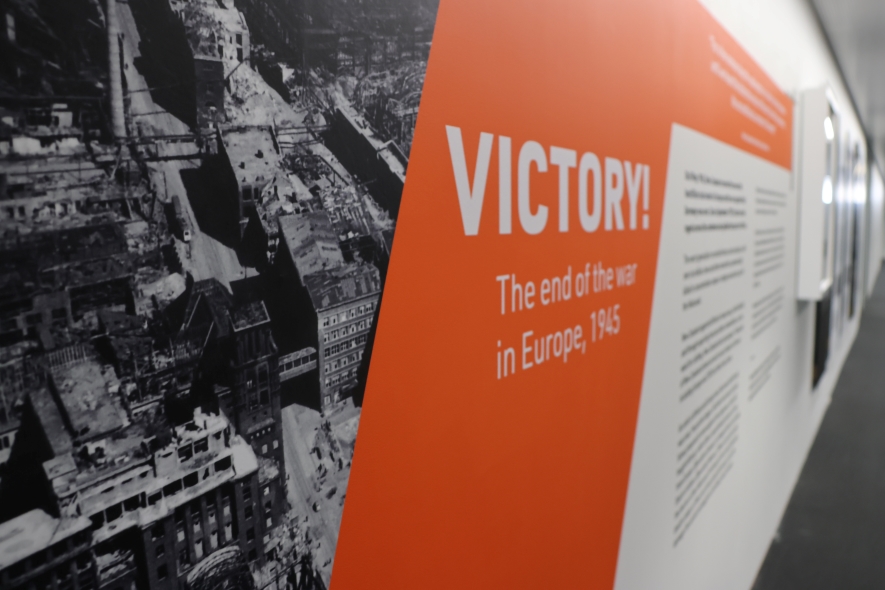
Victory!
It is 80 years since the end of the Second World War.
Our Victory exhibition, upstairs in the atrium, marks this significant milestone in world history, and the story of the RNZAF.
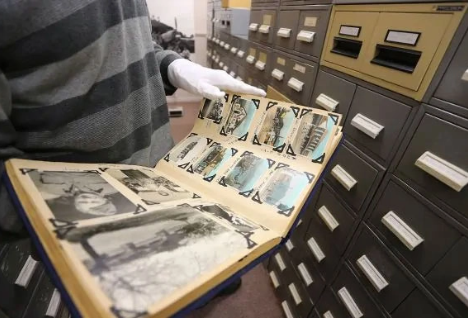
Victory includes images and memories of Victory in Europe (VE) Day and Victory over Japan (VJ) Day which have been sourced from photographs, letters, postcards and personal histories in our collection.
Victory includes insights into how Kiwis celebrated, and how they felt.
Many found it difficult to rejoice after so much loss and suffering.
You’re welcome to come along and learn all about the end of World War Two with us.
Exhibition
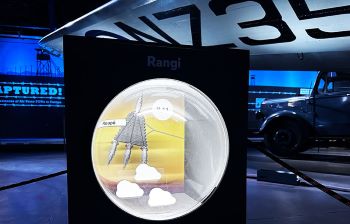
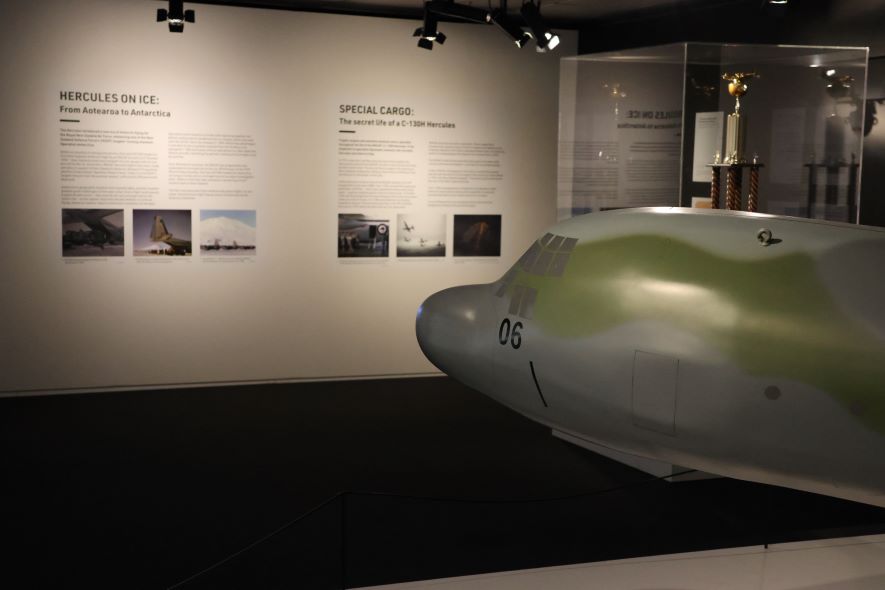
The Mighty Hercules
The Mighty Hercules exhibition is on in the Cochrane Gallery upstairs in our atrium. Come and visit and learn all about this extraordinary aircraft.
Learn More
Update
Overseas visitor charge
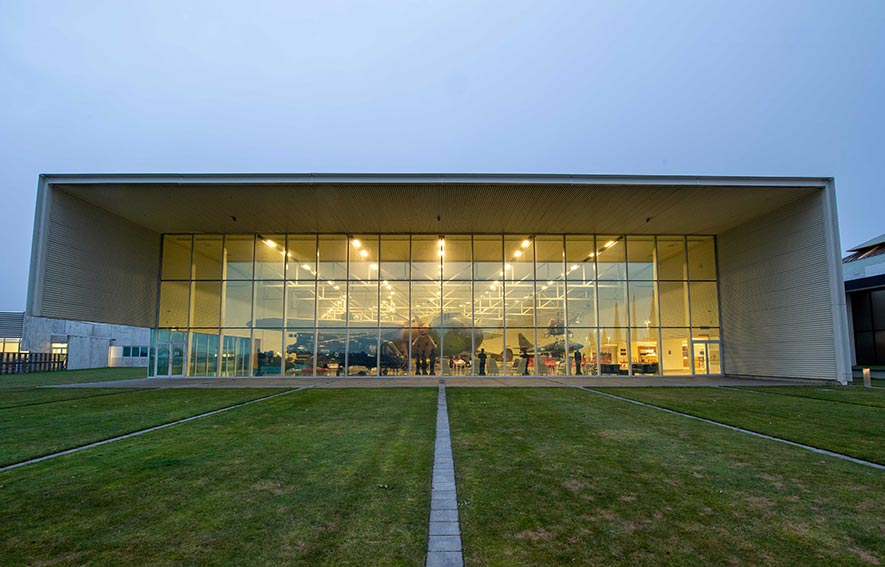
A $15 entry charge was introduced for all international visitors to the Air Force Museum of New Zealand from 31 March 2025. Tickets available online or from our Welcome Desk on arrival.
The charge is required to cover rising costs and to contribute to our new $20 million extension to house the newest members of our collection – our historic Hercules and Orion aircraft.
Learn More
Our Aircraft
Explore AircraftMore to explore



URGENT CLARIFICATION: We’ve been alerted to widespread confusion among the general public about the differences between the Vickers Valiant and the Chrysler Valiant*, so we are moving swiftly to clear things up.
The confusion comes as no surprise given the similarities between these near-identical twins.
As well as sharing a name, both could transport a crew of five in comfort, were large capacity machines designed during the Cold War, and were over-engineered at a time when gas guzzling was the order of the day.
Both were also very easy on the eye, with purposeful looks that belied a steely resolve. Valiants were much more than just eye candy!
Because of this confusion we’ve prepared a handy three-step guide to allow you to tell them apart at a glance.
The first, and most telltale difference to students of the Valiant form, is the characteristic air-to-air refuelling probe that featured on the Vickers Valiant and was notably absent on the Chrysler.
This was handy on the Vickers, and a woeful omission on the Chrysler, which was also a thirsty beast and could have benefited from in-trip or inter-carpark refuelling operations.
Moving on from fuel consumption, the propulsion department is where the two can be separated out reasonably quickly.
The Vickers Valiant was powered by four Rolls-Royce Avon RA28 Mk 204 turbojets, producing 10,000 pounds of thrust each.
The Chrysler version, in its most popular VH configuration, was powered by a Hemi V8 engine, pumping out 230 horses with the jandal down.
The differences were stark – the Vickers could get along at a cracking 912km/h, while the Chrysler Valiant in its standard from would top out at 175km/h.
The final difference – and you will kick yourself for not knowing – is in their nuclear payload – or lack thereof.
The Vickers Valiant rolled off the production line capable of carrying a 4,500kg thermonuclear hydrogen bomb. Alternatively, it could carry up to 21 250kg conventional bombs.
Chrysler did not include nuclear bomb capability as an option.
We’re pleased they didn’t because nuclear-capable Valiants at rush-hour in the wrong hands could have been a threat to peace as we know it.
So, there you have it. Never confuse your Valiants again.
This has been an urgent clarification public notification bulletin issued by the Air Force Museum of New Zealand.
*For our purposes we have used the VH model - arguably the greatest Valiant of all time - for our comparison.
#chryslervaliant #urgentclarification #vickersvaliant #vbombers ... See MoreSee Less
Comment on Facebook
I would also like to add that the Chrysler Valiant can hit the concrete side leading into a bridge at 130kph and come out of it a lot better than when the Vickers version does it. It will pull left and constant right trim will be required thou.
One could also add that the Chrysler Valiant took many a bride to her wedding but cant think that the Vickers Valiant would have ever done that?
My brother just finished restoring a 1966 Valient VC. I think that one could be compared to a tank! Thank you for your work, done brilliantly.
It's been too long since the last Valiant-Vulcan heroics, so let's begin a fundraising campaign to set up a fleet of Chrysler Valiant tankers supporting a Kawasaki Vulcan crew on a non-stop journey from the UK to Australia. Anyone?
Thought the top one was a Buccaneer as it is flying so low.
Not the hero we wanted but the hero we needed.
Love that you have a picture of both Valiants in full flight! Chrysler Valiant didn’t have a fully retractable undercarriage but if you spent a bit of time underneath it with the correct socket and ratchet - you could semi retract the front wheels by easing off the torsion bars. 😇
Hemi V8? Not from factory.
Thank you for the detailed comparison, making it much easier to tell the difference between the two. I wonder if the one without the wings sometimes wished it could be like the one with the wings – the photo seems to indicate a wish to fly. PS That looks like a New South Wales number plate.
Top Image is Australian and the Bottom is British
Thanks for clearing that up. I feel like such a fool for getting the two confused for all these years.
Laura Simôn Chris Maddog
Crack up
View more comments
LUCKY JIM: Our Short Talk Series returns on 7 February with 'The 19 lives of Jim Hayter'.
Join UK historian Geoff Piper for a talk on the extraordinary adventures of Squadron Leader Jim Hayter, DFC and Bar.
Jim, originally from Timaru, joined the RNZAF in 1938 and trained at Wigram.
Our archive photo shows him being treated after a crash in a Vickers Vildebeest during a training flight as an observer. It was the first of many!
What followed was an incredible flying career and wartime service – cheating death 19 times. His adventures included shoot-ups with enemy aircraft during the Battle of France and the Battle of Britain, crashes and an escape from the German army.
Jim was awarded the DFC in 1941 for shooting down four aircraft and damaging another four, and a Bar was added in 1945 for his services as a squadron leader.
After the war he settled down to life farming and working as a mariner in New Zealand, and he passed away in 2006.
Geoff is from Cranbook in England – the town where Jim once parachuted into after being shot down by the Luftwaffe!
The talk is FREE and begins at 10am on Saturday 7 February in our #freethingstodoinchristchurchr#shorttalkseriest#RNZAFi#battleofbritaine#DFCitain #dfc ... See MoreSee Less
Comment on Facebook
How do you book a seat for the talks or do you just turn up?
Will the talk be recorded?
Do you share the talks so they can be seen around NZ?
One of Hayter's "lives" is commemorated in the Omaka Aviation Heritage Centre. On 26 October, 1940, Hayter had to bale out of his Hurricane over Kent. He landed in an estate where an afternoon garden party was in progress. He was invited to join the party and one of the guests, a doctor, treated his light wound while he waited to be picked up.
YOU CAN’T PARK YOUR AVENGER THERE, MATE! Today’s entry was taken aboard the HMS Indefatigable in 1945 and features a Fleet Air Arm Avenger with engine running and pilot in the cockpit, parked precariously on the deck.
What happened next is uncertain, but it doesn’t look like a comfortable place to be parked.
This extraordinary picture is taken from the recently-digitised collection of Kenneth Francis ‘Bruce’ Petrie.
Bruce joined the New Zealand Division of the Royal Navy in 1941, sailing to England to train as a pilot in the Fleet Air Arm. He was one of about 600 Kiwis who flew on operations with the Fleet Air Arm during World War Two.
He flew operations in the Atlantic, the Pacific and flew over Japan towards the end of the war.
We’re incredibly grateful to his family for passing on his precious memories.
The collection of 163 photos from his wartime service can be found in our archive here:
fotoweb.airforcemuseum.co.nz/fotoweb/archives/5023-Bruce-Petrie-personal-collection/ ... See MoreSee Less
Comment on Facebook
Going by the fact the tailwheel is off the deck and you can't see the port undercarriage id say he's going over......unless those cables get tangled up in the prop etc and stop him.
I also parked my Avenger beside the Pacific from time to time. Engine running.